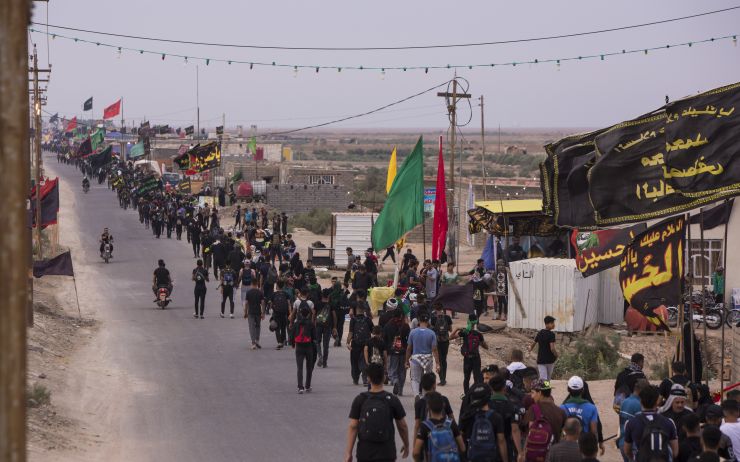

Walking long
distances requires a significant amount of physical, health-related,
psychological, and even skill-based effort, which necessitates completing
this task fully and achieving the intended goal. This demands special
preparation and functional body systems capable of enduring the burdens and
stresses of the physical exertion involved.
It was
observed that no previous study has followed up on the variables affected by
such intense physical effort, which also involve functional parameters
influenced by people of different ages and both genders undertaking these
extremely long distances—distances that these individuals are not accustomed
to—while accomplishing their task and achieving their goal despite all
physical, nervous, and psychological difficulties encountered along the way.
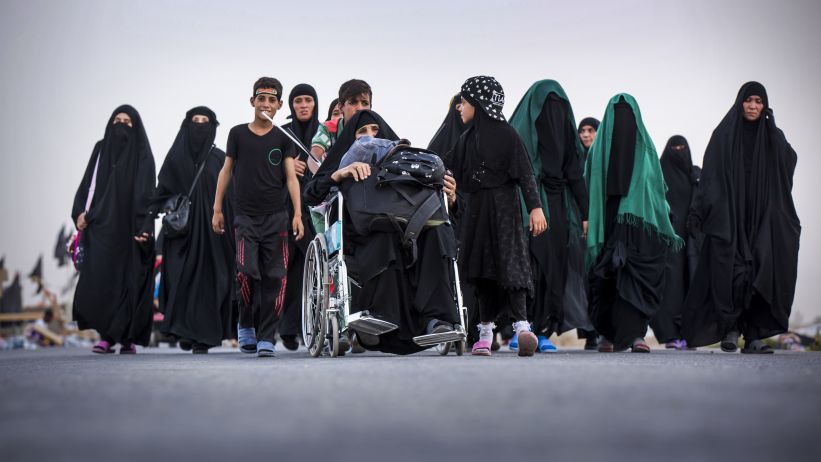
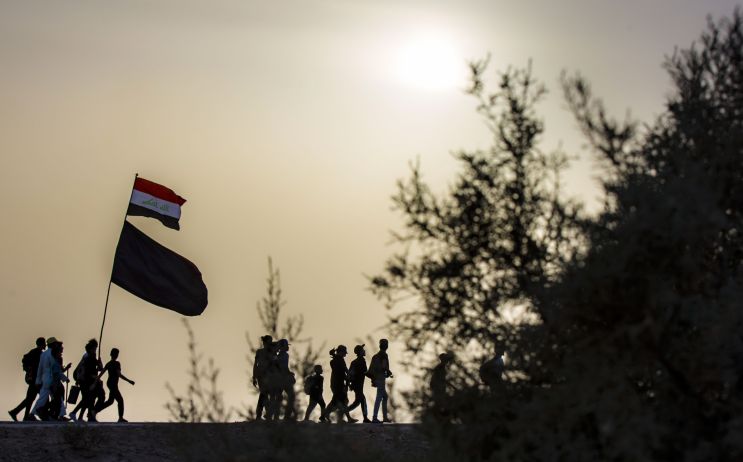
The aim of
the research is to identify the effect of walking during the Arbaeen
pilgrimage on certain circulatory and respiratory system variables,
including high and low blood pressure, blood sugar, lung capacity, blood
lactate levels, heart rate, oxygen saturation, as well as body surface area,
body mass, and metabolic rate, according to age groups for males and females
and for distances less than and greater than 200 km. The study also aims to
compare the effect of walking on these circulatory and respiratory system
variables between genders and age groups across the two distance categories.
Research
procedures: The researcher used the descriptive-analytical
method with a survey approach.
Sample: The sample
was randomly selected across different ages and both genders and divided into
three age groups: adolescents, adults, and the elderly. The total number of
individuals on whom the tests were conducted was 412, as detailed in the
table.